
The Vietnamese Cardinal Minnow (Tanicthys micagemmae) are one of my favourite fishes in the hobby (no bias due to their country of origin). They’re very easily overlooked when compared to more flashy and iridescent fish and don’t stand out too much in an aquascape, but upon closer inspection their colours and behaviours are a joy to watch in a home aquarium.
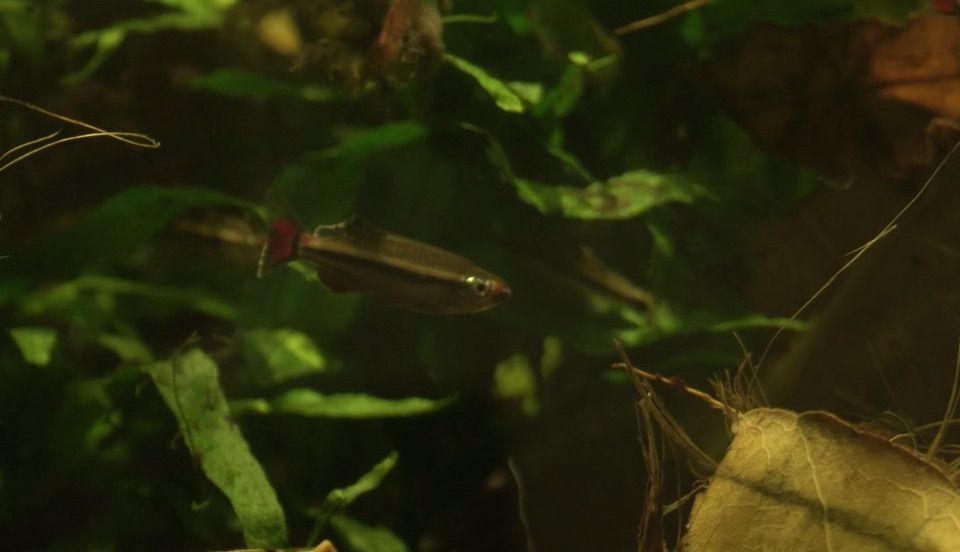
Due to habitat destruction, Vietnamese Cardinal Minnows as well as other closely related species (some of which have only been described a few years ago) are virtually extinct in the wild.
Being similar to the more common White Cloud Mountain Minnow (Tanicthys albonubes), Vietnamese Cardinal minnows are one of the easier egg scattering fish to breed in captivity compared to other species such as Cardinal Tetras.
My previous experiences with spawning Vietnamese Cardinal Minnows
I’ve had success spawning Vietnamese Cardinal Minnows outdoors during the summer in tubs and outdoor tanks which were usually very overgrown with floating and submerged plants and receiving plenty of live food in the form of flying insects and mosquito larvae. I normally set up a tub or tank outside in the spring, monitor the temperature and move a group of ~6 minnows outdoors when nighttime water temperatures stay above 16°C. By the end of summer the tank would be swarming with tiny minnows.
When I initially set up my indoor blackwater riparium, the Minnows would spawn and there would be fry everywhere. However as time passed, although the spawning behaviour continued, I no longer saw any new fry for several months. This was probably due to the population of shrimp and worms/invertebrates becoming more established and eating the eggs and newborn fry which are vulnerable in the first ~72 hours of life. So this year to keep the population of Minnows ticking over (and to keep myself occupied during lockdown), I decided to spawn the Minnows indoors.
Spawning tank setup
Tank: 23L (~5 gallons)
Water parameters (water from main display tank which receives RO water remineralised with tap to target KH 50ppm). As of April 2020: TDS 150ppm, GH 120ppm, KH 80ppm, pH 6.5 – 7, NO3 <10ppm.
Feeding adults: Minnows were conditioned in the main tank with live/frozen/dry foods for around a week prior to moving into spawning tank. After a week of food abundance, the fish became picky and started refusing dry foods (seems like they’ve truly reverted to wild fish by this point). In the spawning tank they were fed frozen foods, but amount was limited to avoid excess waste in the spawning tank.
Feeding fry: Infusoria culture, Liquifry No. 1, Spirulina powder, Microworms and very finely ground dry food.
Filter: Fluval Edge HOB (cover intake with fine sponge to prevent fry/eggs being sucked in). Set to lowest flow rate, outlet flow should be a trickle. Fill with biological media from main tank.
Heater: Bog standard 50W heater set to 23°C.
Substrate: JBL sintered glass bio media. I had this laying around but coarse gravel/marbles will work too. The substrate should be coarse enough for eggs to fall through and out of reach of the adults. Avoid gravels containing crushed coral or calcium carbonate as this will increase water hardness and may discourage spawning (more for pickier species).
Spawning media: I used coconut fibre, it’s cheap and readily forms aufwachs and infusoria providing fry with first food. Can be disposed of by composting or re-used for houseplants. I also see a lot of people using Java moss, which is a great spawning medium but risks introducing predators into the spawning tank depending on where it came from. You can also buy spawning mops that can be washed and re-used. Spawning media should be arranged in a way that provides plenty of cover for the minnows to “do the nasty”.
Plants: Water lettuce and hornwort. Any floating plant will do, important for providing surface cover for newborn fry and direct uptake of ammonium from waste. Roots also provide surface area for bacteria/Infusoria to grow which the fry can graze on.
Light: Cheap-o LED from Amazon, mainly to keep the floating plants happy and to simulate daylight for spawning behaviours.
Indoor spawning diary
Day 1
Introduced 8 adult minnows (2 males and 6 females). All fish were healthy with no visible sign of disease. In an attempt to maintain wild-type characteristics of my fish, I chose them from my main display tank at random while also including the dominant male and female.
The fish were introduced to the spawning tank in the evening. Their colours were noticeably faded and the group showed very tight schooling behaviour while being very skittish.
Day 2
In the morning the minnows still exhibited tight schooling but colours have returned. Spawning activity was seen in the evening where males would display and lure females into spawning media, followed by a characteristic “T” shape spawning behaviour where the male would wrap himself around the female before both releasing eggs and sperm. Bow chicka wow wow.
Day 3
Minnows were generally bolder and schooling less frequently. Males were much more aggressive with their displays and their spawning territories overlapped, resulting in many spawning opportunities being interrupted by the competing males. This 23L tank might be too small for a spawning group with 2 competing males.
As the first batch of eggs should be hatching soon (if any present), all adult fish were moved back to the main display tank in the evening to give the newborn fry the best chance of survival.
Day 4

First batch of fry! I counted 7 but there may have been more. Newly hatched, they usually remain motionless and resemble tiny glass splinters with two tiny eye dots. At around 3mm, and are a lot less developed than livebearer fry. Half of the visible fry were in the cover of floating plants, while the other half were just hanging out in the open looking like tasty snacks.
Day 7

I counted at least 15 fry but there may have been more that I couldn’t see. Most of the fry were free swimming at this point. Unfortunately my infusoria culture wasn’t ready to be harvested so I had to feed them finely resuspended spirulina powder and Liquifry No.1. They didn’t seem too keen on Spirulina powder but were much more active after adding Liquifry.
Day 14
All fry are visibly eating microworms and finely ground dry granules.
Day 31
Fry are about 8mm long and feeding primarily on microworms and finely ground dry granules.
Day 60
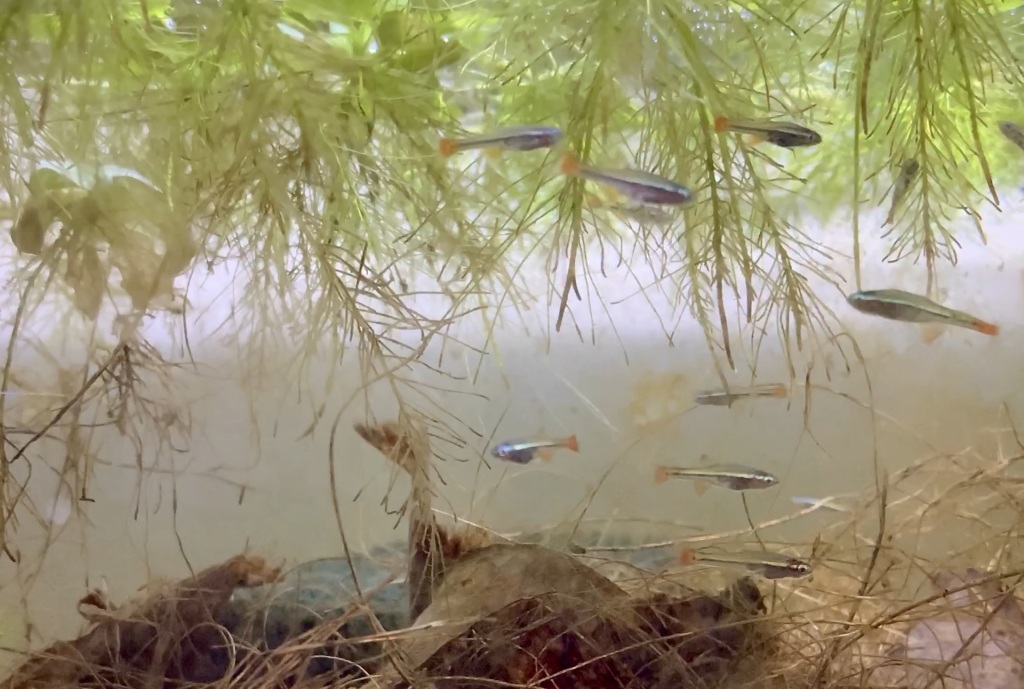
 ATR93
ATR93 