DIY Fan Replacement for the Kessil A360X Tuna‑Blue

Preamble

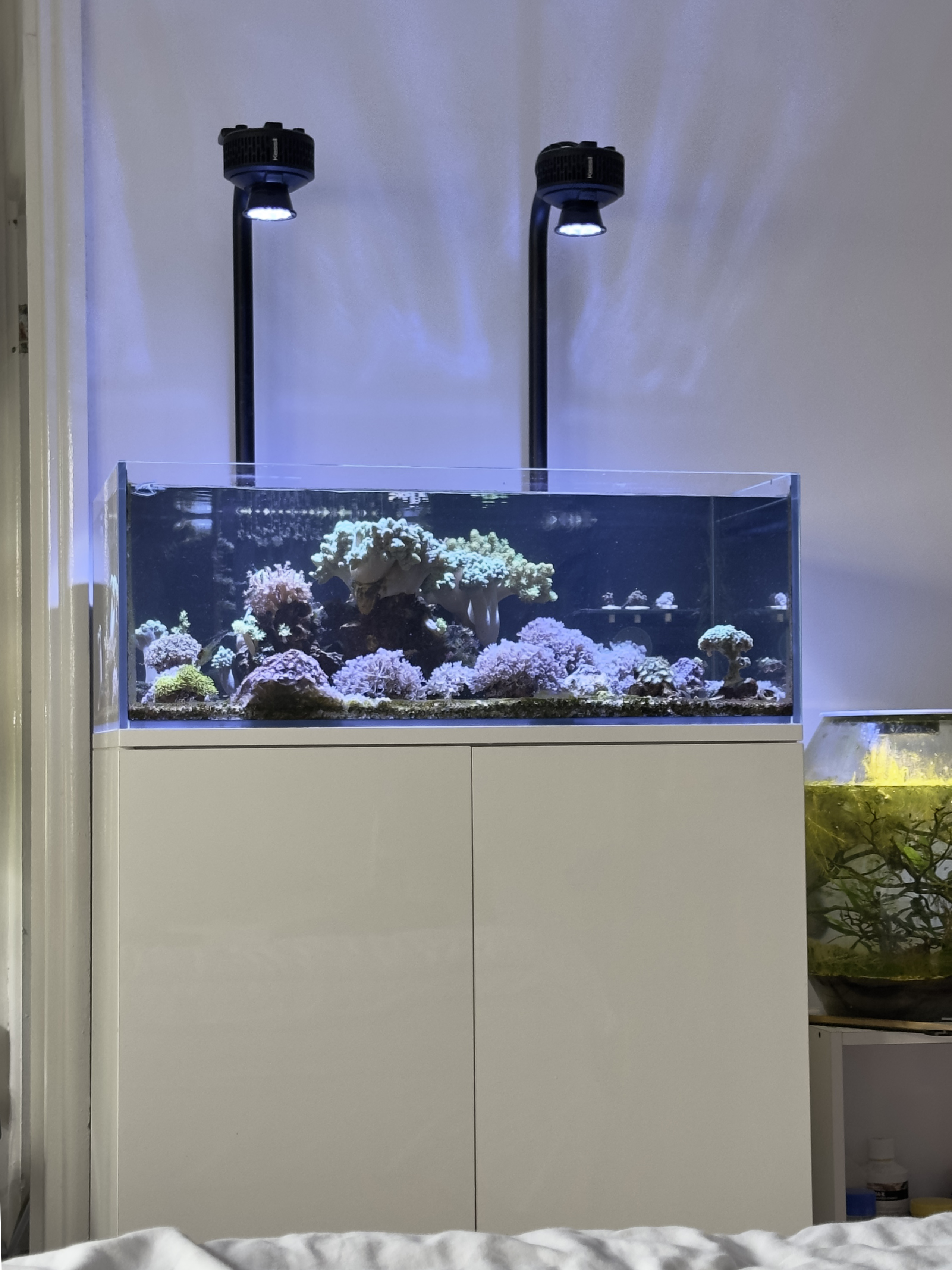
I’ve been running two Kessil A360X Tuna Blue over my reef tank for  five years, and they’re still giving me the same bright, coral‑friendly spectrum I started with. The narrow reflector lets me mount it high above the tank for easy access, not something that is available on other consumer reef LEDs as far as I’m aware. Noise is minimal, dust only needs to be blown out twice a year, and surprisingly the PAR readings remained within 5 % of new‑in‑box values even at 40 % intensity for 12 hours a day.

But one unit’s cooling fan started rattling and became noticeably loud, even though the LED and driver board were still working as expected. That’s when I decided to dig into the guts of the light and see what was going on.
The Problem

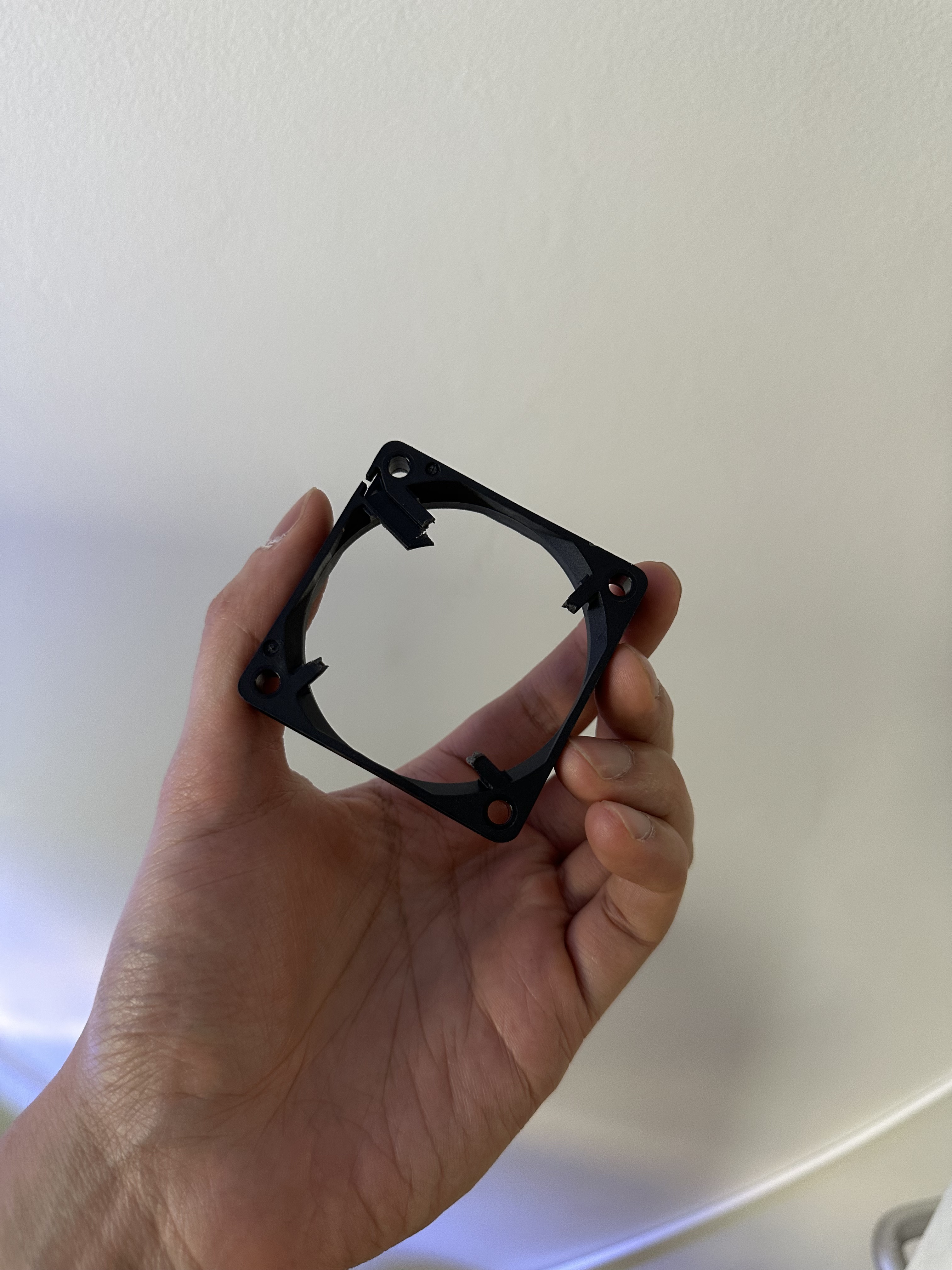
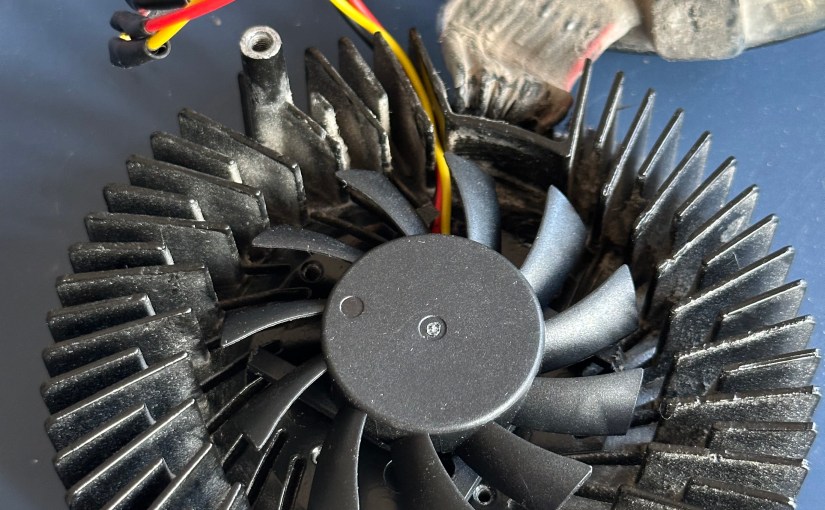
The fan failed just after five years, and the noise grew louder over time.  It turned out that the fan was a small 12 V unit drawing less than 0.3 A, but it had been mounted directly to the heatsink, a design that puts the fan motor and bearing in direct contact with heat from the LED.

Taking the A360X Apart

What you’ll needNotes
1.5mm Hex driverTo remove fan mounting screws
4mm Hex driverTo separate board from LED/heatsink
T10 Torx driverTo remove bottom cover
12V 60mm (10mm height) fan, <0.3A, 3 pinSomething like this or similar should work, https://www.amazon.co.uk/dp/B08688372Q?ref=ppx_yo2ov_dt_b_fed_asin_title
Wire cutting/stripping toolOptional, but makes stripping wires a lot easier
Solder/soldering ironOptional, you could just twist the wires together without solder too
Heat shrink tubing (or electrical tape)To hold the wires together
Needle-nose cutter or similarTo cut the new fan out of its housing

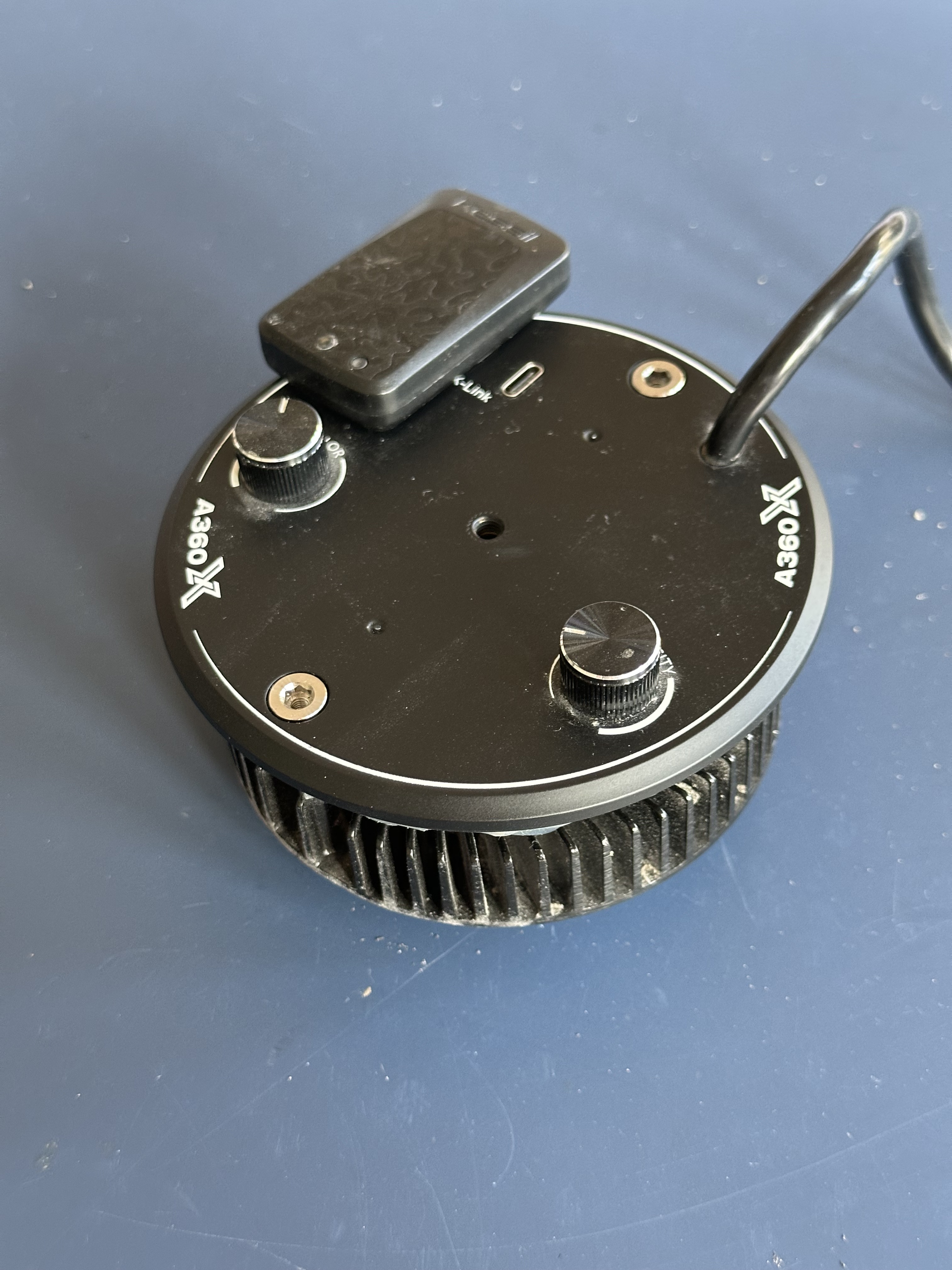
Then unscrew the front panel with a T10 Torx driver. The screws are tight, so take your time to avoid stripping them. Once the cover is off, you can unscrew the two bolts from the top of the light to separate the board and LED/heatsink (the two halves will be connected by wires). You’ll see the fan hub sitting flush on the heatsink, with three mounting screws (accessible through the fan blades). Unlike a typical CPU cooler, there’s no fan housing; the hub is directly exposed to the heat generated by the LED. The fan’s wiring is simple: a 12 V line, ground, and a tachometer pin, however the connector is inaccessible due to the conformal coating on the board. The fan’s part number (Everflow T126015SH(8)) is labeled on the hub, but I couldn’t find an exact matching replacement online.

Design Insight

Kessil’s compact design keeps the light source and fan very close together to save space compared to older models. That proximity means the fan’s bearing runs at higher temperatures than it would if it was mounted through the fan housing. Perhaps a different mounting setup can reduce the temperature at the bearing and extend its life, but for now the existing design works as long as you replace the fan when it wears out.

Sourcing a Replacement Fan

I searched for a generic 12 V fan that draws no more than 0.3 A and has a three‑pin connector (12 V, GND, tachometer). I found a suitable model (https://www.amazon.co.uk/dp/B08688372Q?ref=ppx_yo2ov_dt_b_fed_asin_title) on Amazon for £7. It’s slightly thinner than the original but works just fine.

Replacing the Fan

Cut off the plastic housing of the new fan with a needle nose cutter, keeping the hub intact and making sure there aren’t any. Apply a thin layer of adhesive to the base of the new hub, then press it onto the same spot on the heatsink where the original was mounted. Let it cure for 10–15 minutes.

Next, splice the new fan’s wires to the originals. Strip the ends of the 12V, ground and tachometer leads, twist them together, and solder or use heat‑shrink tubing. Test that the fan spins up as expected before reassembling.

Final Thoughts

Replacing the fan was surprisingly straightforward once you have the right tools and a suitable replacement. Hopefully this will keep these >£450 lights working for at least a few more years.

Happy reef‑keeping!

Vietnamese Cardinal Minnow Spawning Indoors

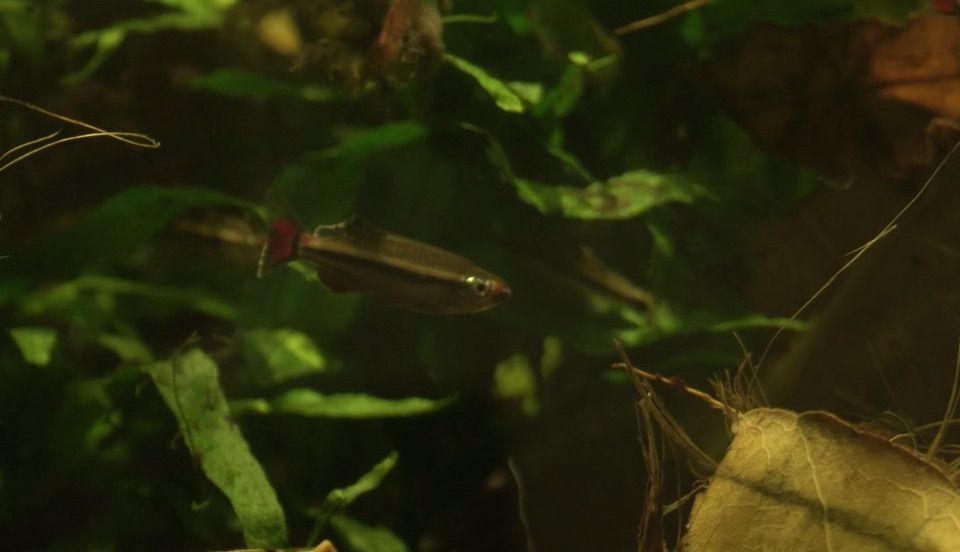
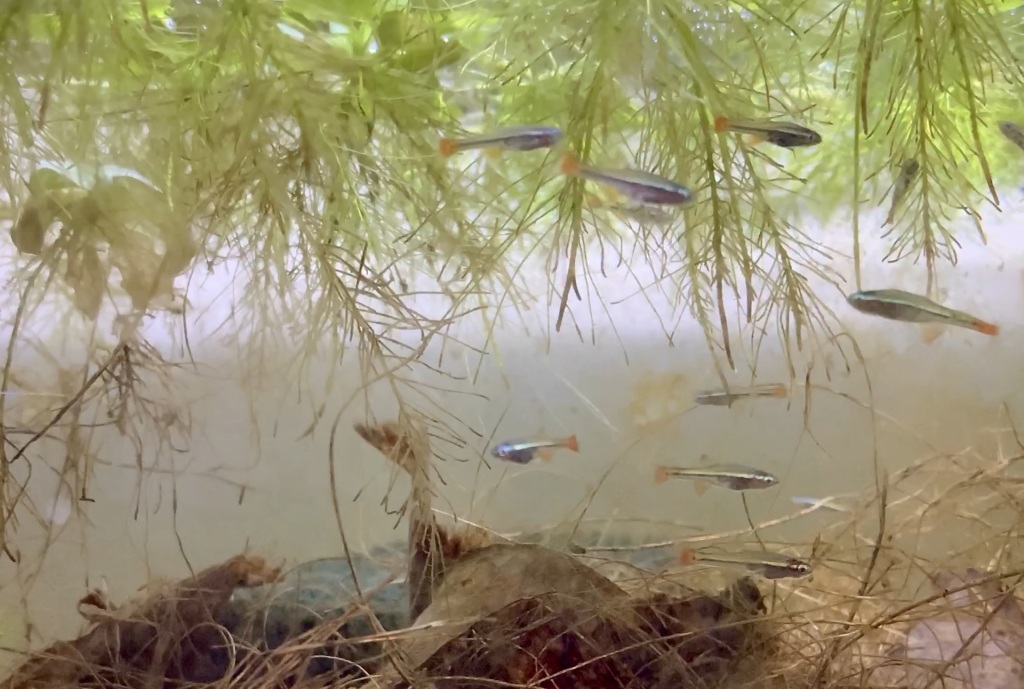
The Vietnamese Cardinal Minnow (Tanicthys micagemmae) are one of my favourite fishes in the hobby (no bias due to their country of origin). They’re very easily overlooked when compared to more flashy and iridescent fish and don’t stand out too much in an aquascape, but upon closer inspection their colours and behaviours are a joy to watch in a home aquarium. 

Due to habitat destruction, Vietnamese Cardinal Minnows as well as other closely related species (some of which have only been described a few years ago) are virtually extinct in the wild. 

Being similar to the more common White Cloud Mountain Minnow (Tanicthys albonubes), Vietnamese Cardinal minnows are one of the easier egg scattering fish to breed in captivity compared to other species such as Cardinal Tetras.

My previous experiences with spawning Vietnamese Cardinal Minnows

I’ve had success spawning Vietnamese Cardinal Minnows outdoors during the summer in tubs and outdoor tanks which were usually very overgrown with floating and submerged plants and receiving plenty of live food in the form of flying insects and mosquito larvae. I normally set up a tub or tank outside in the spring, monitor the temperature and move a group of ~6 minnows outdoors when nighttime water temperatures stay above 16°C. By the end of summer the tank would be swarming with tiny minnows. 

When I initially set up my indoor blackwater riparium, the Minnows would spawn and there would be fry everywhere. However as time passed, although the spawning behaviour continued, I no longer saw any new fry for several months. This was probably due to the population of shrimp and worms/invertebrates becoming more established and eating the eggs and newborn fry which are vulnerable in the first ~72 hours of life. So this year to keep the population of Minnows ticking over (and to keep myself occupied during lockdown), I decided to spawn the Minnows indoors. 

Spawning tank setup

Tank: 23L (~5 gallons)

Water parameters (water from main display tank which receives RO water remineralised with tap to target KH 50ppm). As of April 2020: TDS 150ppm, GH 120ppm, KH 80ppm, pH 6.5 – 7, NO3 <10ppm.

Feeding adults: Minnows were conditioned in the main tank with live/frozen/dry foods for around a week prior to moving into spawning tank. After a week of food abundance, the fish became picky and started refusing dry foods (seems like they’ve truly reverted to wild fish by this point). In the spawning tank they were fed frozen foods, but amount was limited to avoid excess waste in the spawning tank. 

Feeding fry: Infusoria culture, Liquifry No. 1, Spirulina powder, Microworms and very finely ground dry food. 

Filter: Fluval Edge HOB (cover intake with fine sponge to prevent fry/eggs being sucked in). Set to lowest flow rate, outlet flow should be a trickle. Fill with biological media from main tank.

Heater: Bog standard 50W heater set to 23°C.

Substrate: JBL sintered glass bio media. I had this laying around but coarse gravel/marbles will work too. The substrate should be coarse enough for eggs to fall through and out of reach of the adults. Avoid gravels containing crushed coral or calcium carbonate as this will increase water hardness and may discourage spawning (more for pickier species). 

Spawning media: I used coconut fibre, it’s cheap and readily forms aufwachs and infusoria providing fry with first food. Can be disposed of by composting or re-used for houseplants. I also see a lot of people using Java moss, which is a great spawning medium but risks introducing predators into the spawning tank depending on where it came from. You can also buy spawning mops that can be washed and re-used. Spawning media should be arranged in a way that provides plenty of cover for the minnows to “do the nasty”. 

Plants: Water lettuce and hornwort. Any floating plant will do, important for providing surface cover for newborn fry and direct uptake of ammonium from waste. Roots also provide surface area for bacteria/Infusoria to grow which the fry can graze on. 

Light: Cheap-o LED from Amazon, mainly to keep the floating plants happy and to simulate daylight for spawning behaviours. 

Indoor spawning diary

Day 1

Introduced 8 adult minnows (2 males and 6 females). All fish were healthy with no visible sign of disease. In an attempt to maintain wild-type characteristics of my fish, I chose them from my main display tank at random while also including the dominant male and female.

The fish were introduced to the spawning tank in the evening. Their colours were noticeably faded and the group showed very tight schooling behaviour while being very skittish. 

Day 2

In the morning the minnows still exhibited tight schooling but colours have returned. Spawning activity was seen in the evening where males would display and lure females into spawning media, followed by a characteristic “T” shape spawning behaviour where the male would wrap himself around the female before both releasing eggs and sperm. Bow chicka wow wow. 

Day 3

Minnows were generally bolder and schooling less frequently. Males were much more aggressive with their displays and their spawning territories overlapped, resulting in many spawning opportunities being interrupted by the competing males. This 23L tank might be too small for a spawning group with 2 competing males. 

As the first batch of eggs should be hatching soon (if any present), all adult fish were moved back to the main display tank in the evening to give the newborn fry the best chance of survival. 

Day 4

First batch of fry! I counted 7 but there may have been more. Newly hatched, they usually remain motionless and resemble tiny glass splinters with two tiny eye dots. At around 3mm, and are a lot less developed than livebearer fry. Half of the visible fry were in the cover of floating plants, while the other half were just hanging out in the open looking like tasty snacks. 

Day 7

I counted at least 15 fry but there may have been more that I couldn’t see. Most of the fry were free swimming at this point. Unfortunately my infusoria culture wasn’t ready to be harvested so I had to feed them finely resuspended spirulina powder and Liquifry No.1. They didn’t seem too keen on Spirulina powder but were much more active after adding Liquifry. 

Day 14

All fry are visibly eating microworms and finely ground dry granules.

Day 31

Fry are about 8mm long and feeding primarily on microworms and finely ground dry granules.

Day 60

New RO/DI system

RO/DI water is almost pure and has several uses in fishkeeping especially in marine aquariums. In freshwater aquariums, RO/DI water can be used routinely in auto-top-offs to prevent GH/KH accumulating when topping up due to evaporation. Carefully mixing London tap water with RO/DI reduces water hardness to better replicate some conditions found in the wild. This is especially important to encourage natural behaviours of many of the fish species we keep and increase spawning rates.

A downside to using RO/DI is the wastewater produced by the process. For every 1L of pure water produced, around 3L of high TDS water is “wasted”. Most places I’ve seen including our research labs simply dispose of the waste water down the drain, but at home this water can still be used for anything that doesn’t require low TDS like cleaning or watering plants.

Anyway, now that it’s set up I wonder why I didn’t have this before. It’s so convenient compared to carrying barrels of water from the aquarium shop (or from work ) and super easy to get going. You can plumb it into your main water line with a self piercing saddle valve, or attach to an outside hose tap like I did.

I bought mine from Vyair (UK) and they were super helpful in advising me on how to set up my unit. Mine is the RO-100M, currently using without a resin stage as I don’t need ultra pure water, but nice to have the option in case my needs change.

Role of Plants in the Nitrogen Cycle (in the Home Aquaria)

Possibly the most persistent myth in the aquarium hobby is the belief that the primary role of aquatic plants in the nitrogen cycle is to uptake nitrates. This has been repeated many times in older aquarium literature, but frustratingly many recently published sources (including books) incorrectly describe the role of plants in the nitrogen cycle. Understanding the “correct” nitrogen cycle in an aquarium has important implications to planning and maintaining a planted aquarium.

Nitrification

screen-shot-2017-02-21-at-22-35-28
Nitrification Simplified

It is widely accepted that nitrification (converting harmful ammonia into nitrites and then nitrates) is carried out by nitrosomonas and nitrobacter, aerobic bacteria which are present in the soil and water attached to surfaces. The chemical process from converting ammonia into nitrites and then to nitrates releases energy, which the bacteria use for their metabolism.

The Role of Aquatic Plants in the Nitrogen Cycle

Aquatic plants require nitrogen to synthesise proteins, and can only use nitrogen in the form of ammonia. Indeed, plants can uptake nitrates, although they must convert nitrates into ammonia before they can use the nitrogen, a process which requires significant energy (the same amount of energy nitrifying bacteria have gained from the opposite reaction).

Experiments have shown that when given both ammonia and nitrates, aquatic plants will only uptake nitrates when ammonia has been depleted. When aquatic plants are given a choice between ammonia and nitrates, most aquatic plants vastly prefer the uptake of ammonia over nitrates even if this means “competing” with nitrifying bacteria.

screen-shot-2017-02-21-at-22-35-09
Bacteria gain energy from nitrification, while plants must spend energy to obtain ammonia

Implications for the Home Aquarium

The uptake of ammonia by aquatic plants has practical implications for the aquarist. Most importantly, it de-emphasises the importance of a “biological” filter in aquaria with healthy fast growing plants. Although essential in aquariums without plants or with very little plant growth, many would argue that the biological filter is an unreliable way of dealing with ammonia in an aquarium. Nitrifying bacteria require plenty of flow and oxygen, can be sensitive to changes in water chemistry and their growth is very slow (division ~18 hours), during which time ammonia “spikes” can occur if there are any rapid changes to stocking or feeding levels. Nitrification also causes nitrate levels to increase and pH to fall, two reasons why frequent water changes are necessary in aquariums relying on the biological filter for ammonia control.

Using fast growing (especially emergent) plant growth in an aquarium is a considerably better way of controlling ammonia than a biological filter. Most aquatic plants prefer the uptake of ammonia directly compared to nitrates, and by competing with nitrifying bacteria, can prevent the buildup of nitrates in the aquarium. Competition with nitrifying bacteria for ammonia, rather than the direct uptake of nitrates may be the reason why aquariums with plants have lower nitrate levels than those relying on the biological filter. Acidification of aquarium water due to nitrification can also be prevented by using plants for ammonia control, as they compete with nitrifying bacteria for ammonia and consume H+ ions in photosynthesis.

As Diana Walstad said in her book, Ecology of the Planted Aquarium, “let the plants do the work for you!”.

2017-02-25 19.51.35.jpg
Letting the plants do the work for me in my no-maintenance planted Walstad Bowl

Easy-Peasy Amazon Biotope Aquarium

Biotope

There is something quite rewarding about setting up a biotope tank. With high lighting, dosing and CO2 readily available to more everyday hobbyists, it is tempting to go the purely artistic route and select plants, fish and decor for our tanks that look nice and have aesthetic appeal together.

But sometimes, it’s nice to limit choice and select flora and fauna originating from a specific environment. A biotope aquarium can be like having a slice of natural habitat in your home, and more often than not the fish display natural behaviours and colours rarely seen in more “ornamental” tanks.

I think the Amazon blackwater biotope is the easiest to set up and maintain, especially as it’s not dependent on submerged plant growth which many beginner hobbyists struggle with. The Amazon blackwater biotope is characterised by slow flowing dark, tannin-stained water, little to no submerged plant growth a substrate covered with leaf litter at varying stages of decomposition. Fish species are varied, including many species of tetras, corydoras and otocinclus.

Hardscape and Fauna

Keeping the layout simple, I used a shallow layer of sand covered with catappa leaves and a piece of driftwood. I decided on a shoal of cardinal tetras for this tank, an obvious choice for an Amazon biotope. They acclimated extremely well and coloured up fully within an hour of introduction to the tank. The Otocinclus I added were also quick to acclimate to the tank, and within hours they were swimming around and feeding among the leaf litter.

2016-02-20-22-34-17
Cardinal Tetra

2016-02-20-22-27-26
Otocinclus

It took me a while to decide which “showcase fish” to add to the tank, as many Amazon biotope aquariums I’ve seen either contained a huge shoal of tetras, Discus or Angelfish. None of these would be suitable for the size of my tank, so I decided to add a small group of Bentosi’s Tetra, a deep bodied species of Tetra with very interesting white-tipped finnage. Like the other fish, the Bentosi’s acclimated much faster than I’m used to and the following morning they were showing breeding behaviours among the roots of floating plants.

2016-02-20-22-28-16
Bentosi Tetra

I also added various snails and cherry shrimp, although not specifically from the amazon, their versatility and readiness to breed make them extremely useful in any tank.

Water Conditions

I’m using standard dechlorinated tap water in this tank with a pH of 7.4, although decaying leaf litter tends to reduce pH to 6.5. The leaf litter is also responsible for staining the water a brown colour, mimicking the natural habitat. Cardinal tetras require a temperature of ~26-28ºC, which is higher than most other tropical fish which do well at 24ºC. I used an acetate lid to reduce heat and evaporative loss, without which I’d lose almost 2 litres a week. The lid also has the effect of increasing the heat and humidity of the air surrounding the floating plants, which may be beneficial to plant growth. I’m dosing APF’s Trace/Macro EI solution, although only 1/4 of the recommended dose and adjusting according to the condition of duckweed (or “duckweed index”). I think that any old aquarium fertiliser providing trace elements and potassium would work here, as nitrates and phosphates are quite high in London tap water anyway.

Plants

I decided to use the floating plants water lettuce (Pistia), duckweed (Lemma), Salvinia and Amazon Frogbit in this tank, as they are commonly found among the banks of the Amazon river. In the aquarium, they serve a useful function of biological filtration, drastically reducing the need for a bacterial based biological filter to remove ammonium. This is advantageous as nitrifying bacterial filters take time to develop, lower pH as they work and produce nitrates which accumulate over time (nitrate creep). Plants absorb ammonium from fish waste directly, and use it to produce their own biomass. In this way, the hobbyist can “remove” nitrogen from the aquarium simply by pruning plants. The roots of water lettuce and duckweed also provide a huge surface area and substrates for bacterial colonisation, and it is likely that nitrifying bacteria are also present here, although I suspect much of the ammonium uptake is by the plants themselves.

I find that my heavily planted tanks don’t suffer from nitrate “creep” at all, unlike my lightly planted goldfish tank which relies on a bacterial filter for nitrification and requires weekly water changes to keep nitrates in check.

I found that the Pistia got quite large (30cm across) despite being indoors, which I can attribute to either the high humidity under the acrylic sheet or the high lighting from the LEDs (more on this below). After a certain size, Pistia starts producing small white flowers about 10mm long from the centre of the rosette. In my other tanks exposed to “room air” and with lighting suspended higher over the tank, the water lettuce would only grow to about 7cm across and produce no visible flowers at all.

2016-02-24-21-41-22
Water Lettuce (Pistia) Flower

Lighting

Relying to plants for biological filtration requires rampant healthy growth. A straggly piece of elodea probably won’t do much to reduce ammonium levels. To encourage fast plant growth, I’m using two TMC Aquaray 400 tiles at 12W each mounted about 20cm above the tank, which should provide considerable PAR at the surface and mimic the tropical sun. Normally for a tank this small I would not run these lights over 40% unless I knew I could keep CO2 levels stable enough to prevent algae growth, but the dense shade provided by the floating plants as well as the tannin stained water prevent excessive light from reaching the substrate or front glass, and I never have problems with algae.

One of the factors that makes a blackwater biotope tank so easy is that algae growth is low. You can throw tons of light onto the tank to encourage fast growing floating plants to out-compete algae, and the tannin stained water prevents excessive light from reaching submerged surfaces.

Circulation

Whichever method of circulation I used in this tank, I wanted it to be very gentle to represent the slow moving blackwater habitats. Slow water movement also allows the leaf litter to settle nicely and not get bunched up in a corner of the tank. Originally, I decided to use an airstone in the corner to provide some water movement, however this produced tiny droplets which covered the leaves of Pistia with tannins and biofilm. The airstone was also very loud which was a no-no for my bedroom.

The tank is now circulated by a fairly cheap 100l/h internal filter, with a spraybar attachment to distribute the flow more evenly. A simple coarse sponge is used in the media compartment, simply to prevent snails and debris entering the impeller shaft.

2016-02-20-22-34-26
Full Tank Shot

I suppose the main reason for this post was to demonstrate how easy it is to set up and maintain a biotope aquarium like this. With the availability of CO2, nutrient dosing and ever more complicated filtration and equipment, it is easy to get caught in the high-tech trap. This biotope is the opposite, with only the most basic of equipment, low running costs and minimal maintenance. Oh and lots of leaf litter and happy fish.